
01
Where it begins.
COMMUNITY
Schools, workplaces, facilities, neighbourhoods and grassroots groups create the first opportunities to play and compete.
01 COMPETITION
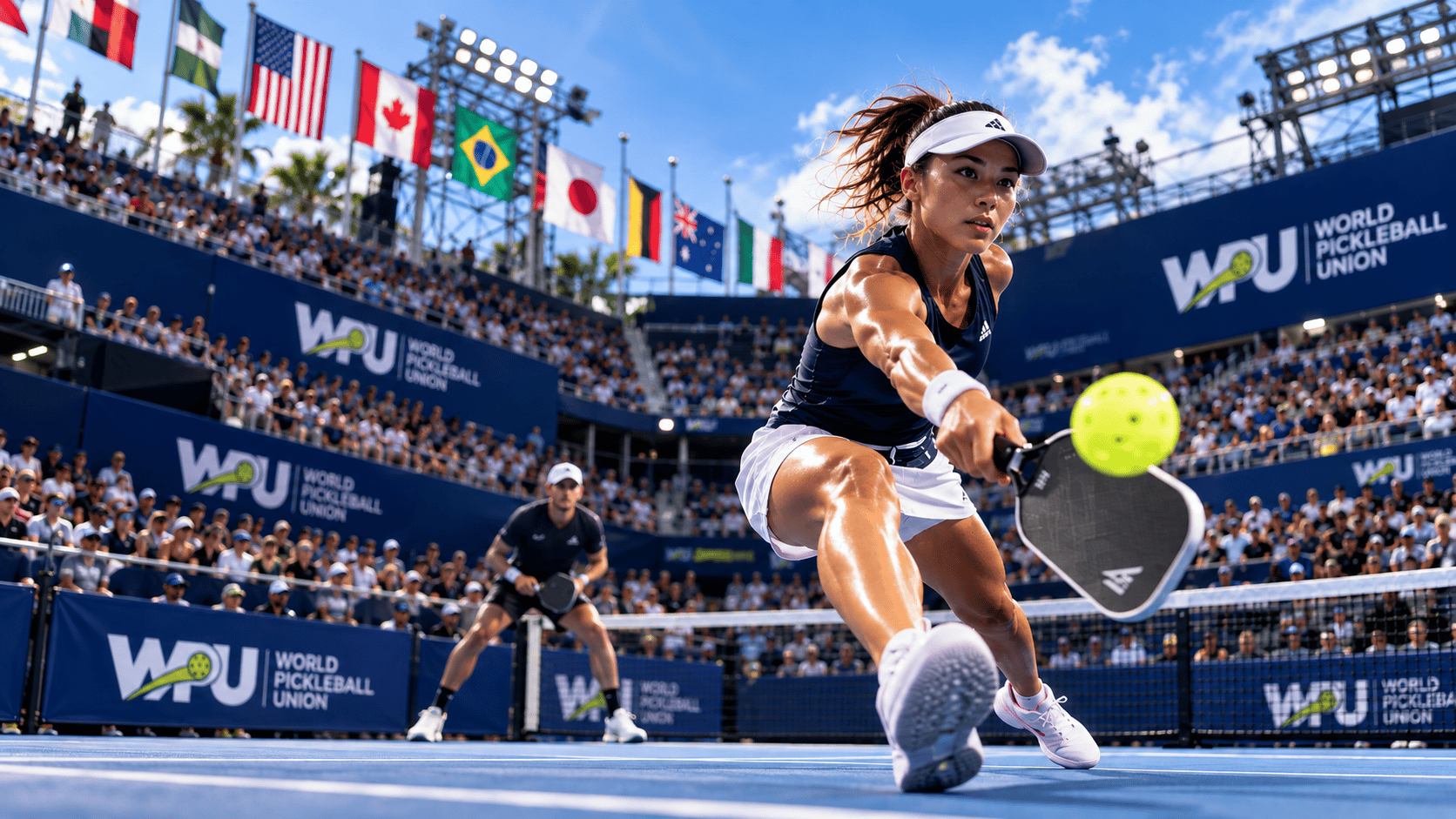
WPU is developing a competition ecosystem that can connect the smallest pickleball community with the largest international stage.
EXPLORE THE ECOSYSTEM ↓02 FROM FIRST GAME TO WORLD STAGE
WPU's developing competition philosophy starts with the grassroots. Communities create players. Clubs create belonging. Domestic structures create pathways. International competition connects them.
Different countries will require different structures. The objective is not to impose one rigid ladder, but to create a connected international ecosystem that can accommodate them.
03 THE COMPETITION ECOSYSTEM
The levels describe scale, not a compulsory qualification route. National organisations can build structures appropriate to their own geography and sporting environment.
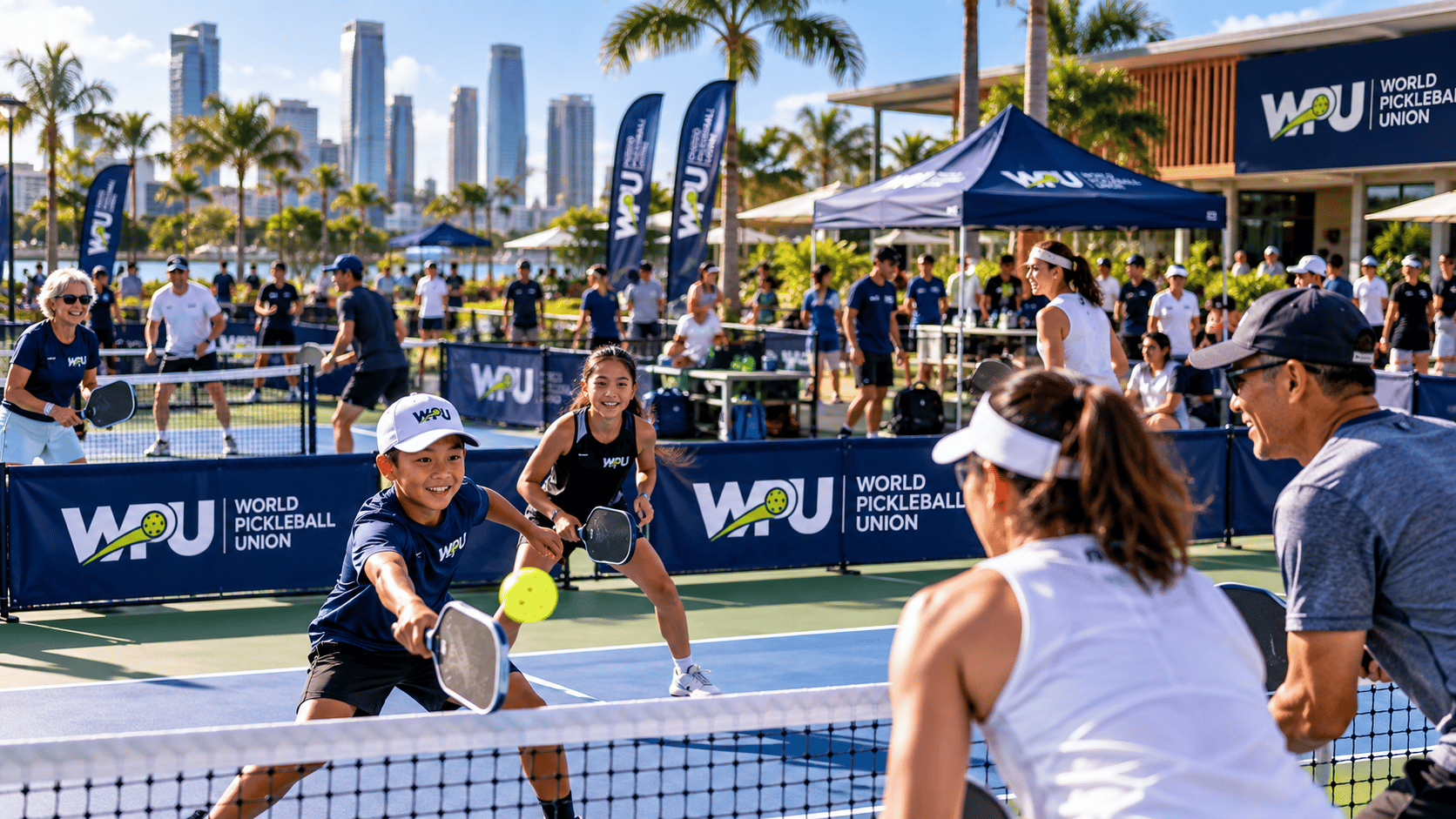
Schools, workplaces, facilities, neighbourhoods and grassroots groups create the first opportunities to play and compete.
Regular play, training, ladders, leagues and teams create a lasting competitive home.
Clubs and groups compete across cities, municipalities, districts and other local structures.
State, province, prefecture, county, territory or other structures appropriate to each country.
National competition, championships and pathways toward representing a country.
Neighbouring countries connect through appropriate international geographic groupings.
Broader international competition across continental structures adopted by WPU.
The highest level of future WPU international competition and representation.
UNITING PICKLEBALL WORLDWIDE.
04 A TWO-WAY SYSTEM
05 WAYS TO COMPETE
Competition can exist throughout the ecosystem. Not every match needs to lead toward elite international play to have value.
Accessible competition that brings people into the sport.
→Recurring competition that creates consistency and community.
→Structured events across appropriate levels of the ecosystem.
→Competition for recognised titles within an adopted framework.
→Competition built around clubs, organisations and national representation.
→High-performance competition at the upper levels of the sport.
→06 REPRESENTING YOUR COUNTRY
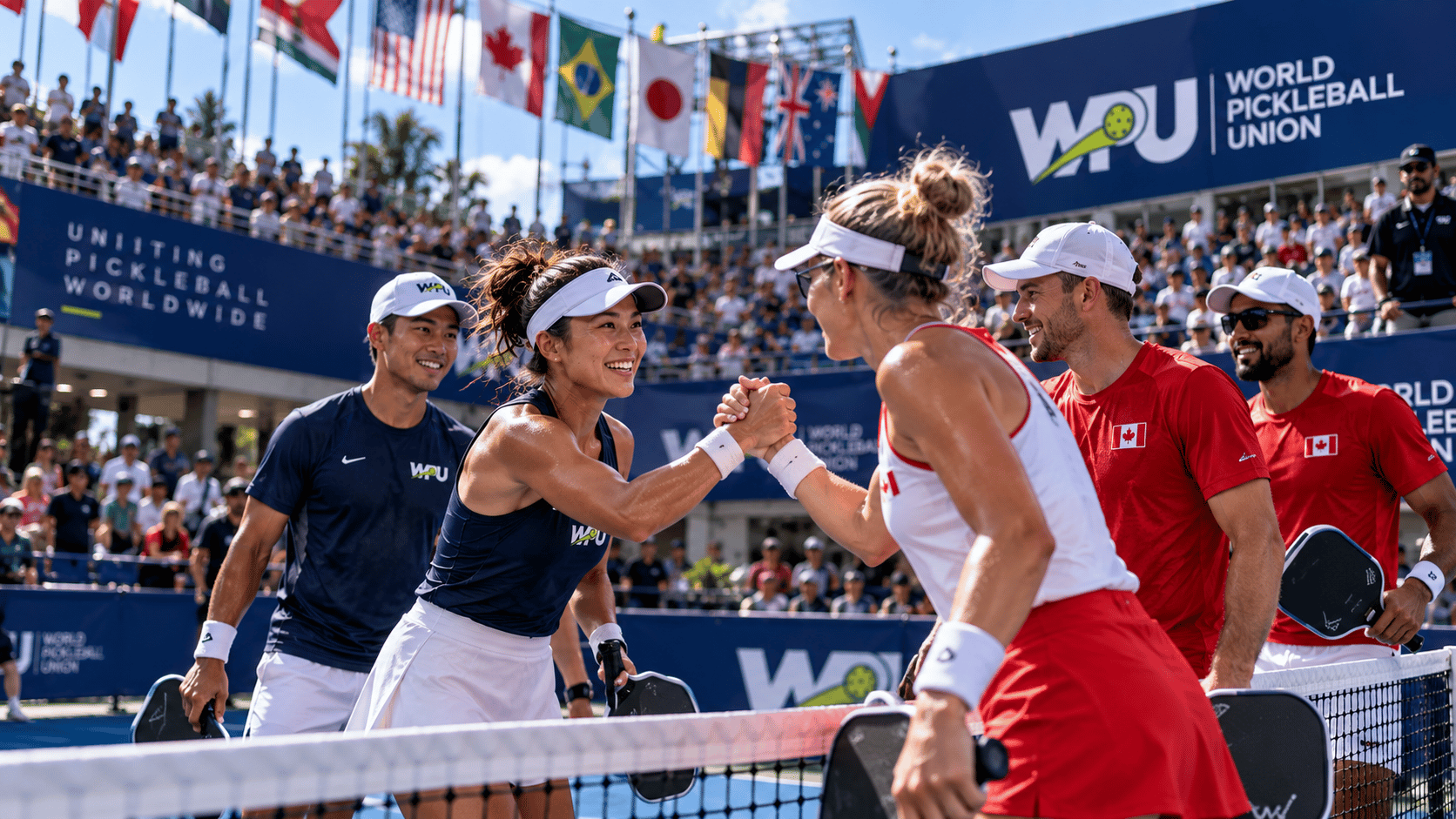
One of the most meaningful transitions in sport is from competing as an individual to representing something larger.
Domestic competition
National pathway
Your country
International competition
Athlete eligibility and national representation requirements will be defined through formally adopted WPU competition regulations.
07 COMPETITION CATEGORIES
WPU intends to support competition structures capable of serving different formats, ages and levels of play.
Individual competition
Two-player team competition
Mixed team competition
Club, regional and national team formats
Age-group competition where appropriate
Additional classifications as frameworks develop
Final competition categories and classifications remain subject to the WPU competition framework currently in development.
08 INTERNATIONAL CALENDAR
Official WPU competitions will appear here once formally confirmed.
09 WORLD RANKINGS
WPU intends to develop an international ranking framework that can recognise competitive performance across appropriate sanctioned events and levels.
10 RULES · OFFICIATING · STANDARDS
Rules of play, equipment standards, officiating, event operations, athlete eligibility and competition integrity all contribute to credible international sport.
EXPLORE WPU STANDARDS →11 HOST WITH WPU
WPU welcomes early conversations with national organisations, cities, venues and event partners interested in future international competition.
Explore future sanctioned and representative competition.
Explore the potential of international pickleball events.
Discuss facilities, operations and event collaboration.
12 COMPETITION INTEREST
Tell WPU about your organisation, destination, venue or proposed competition.
WORLD PICKLEBALL UNION
COMMUNITY · CLUB · NATION · WORLD